
PRACTICE + SCIENCE / PRODUCT REFERENCE
Multi-Dose Vials After OpeningWhen Does the 28-Day Rule Apply?
The opening date, the product instruction and the original expiration answer different questions.
At a glance
What to verify first
- For opened, commercially manufactured non-vaccine multidose medication vials, CDC describes a 28-day dating and discard period unless the manufacturer specifies another period; the original expiration remains a ceiling, and questionable sterility requires discard sooner. [1]
For opened, commercially manufactured non-vaccine multidose medication vials, CDC describes a 28-day dating and discard period unless the manufacturer specifies another period; the original expiration remains a ceiling, and questionable sterility requires discard sooner. [1]
Fictional people-led calendar scene created with AI. Its empty dates do not establish a discard date or product instruction.
An opening-date sticker can look complete while leaving the most important question unanswered: which instruction established the date? A routine "28 days" entry is only useful when staff have confirmed that the exact product belongs under that rule and have retained the other limits that apply.
The practical task is to make the basis for the date visible. That allows the next person reviewing the vial to trace the instruction to the product, instead of interpreting a handwritten date as evidence that every relevant check was completed.
Three different limits belong in the record
Opening includes needle puncture. [1]
Use separate fields so a reviewer can see both what has been documented and what is still missing. A date calculation cannot fill a gap in the underlying record.
Three checks for the same vial
Default and manufacturer exception: CDC non-vaccine guidance: 28 days after opening unless the manufacturer specifies otherwise. [1]
Original expiration: Keep the printed expiration visible beside the entered-vial record. A later calculated date does not extend it.
Sterility condition: A remaining time allowance does not establish that a vial is acceptable when sterility is compromised or questionable.
CDC non-vaccine multidose reference. All three constraints apply together; this is not a use-until calculator. [1]
A documented 30-day manufacturer exception
The BPI Labs epinephrine presentation identified as NDC 54288-120-01 contains 10 mg/10 mL (1 mg/mL) in a 10 mL multiple-dose vial. Section 16 directs discard 30 days after initial use. That is a product-specific exception to the default interval; the original-expiration and sterility limits still apply. [2] [1]
The identifier is essential to this example. An entry saying only "epinephrine" would omit the presentation used to establish the instruction. Copying this interval to another product would remove the evidence that makes the exception meaningful.
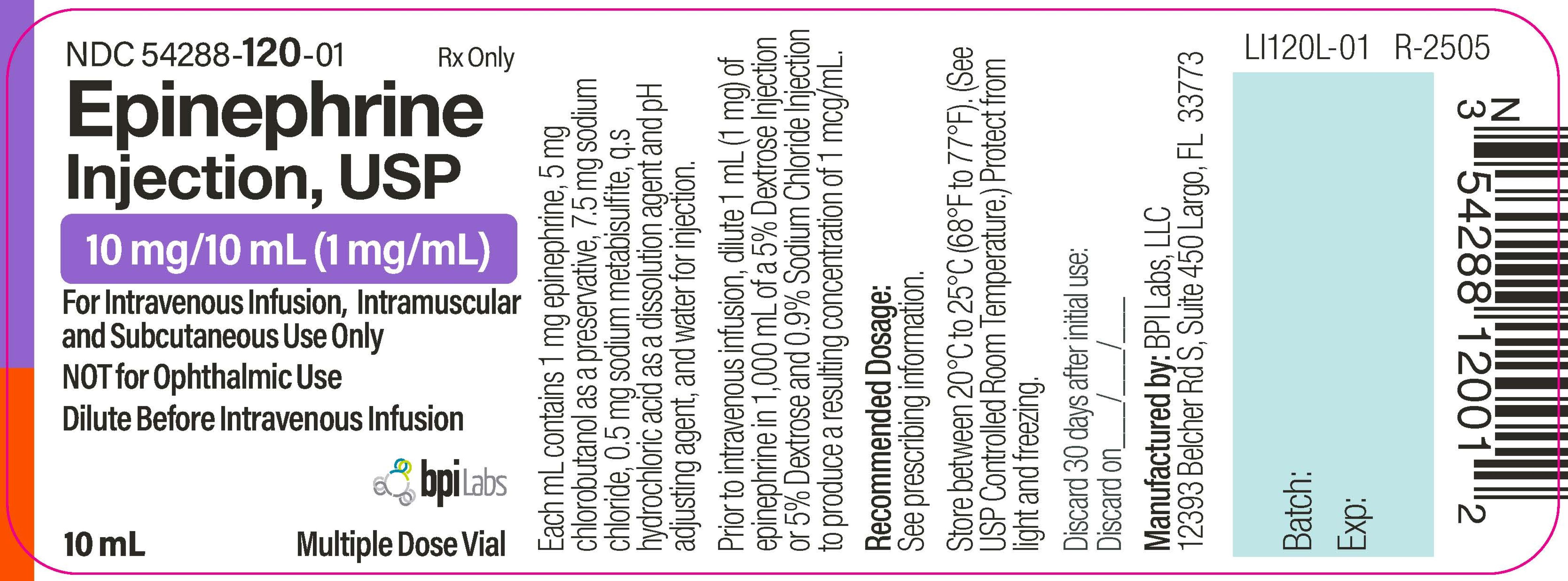
Original BPI Labs vial-label art. Its 30-day instruction belongs to this identified presentation; the empty batch and expiration fields are not completed here.

PRACTICE + SCIENCE / VISUAL REFERENCE
Keep the dating basis visible.
First entryExact instructionPrinted expiration
Conceptual artwork created with AI. A generic sealed vial beside blank date labels and a diary. Product identity and instructions come from the cited sources, not this illustration.
A worked record: replace the unsupported default
Consider a hypothetical record containing only "discard 28 days after opening." The practice has identified the exact BPI presentation above, but the record has no first-entry date, original expiration or instruction reference. Changing 28 to 30 would correct only one field. It would still leave the record incomplete.
The example below shows which information is still needed. Complete those fields under the practice's policy; the example does not establish a discard date.
A worked record with known and missing fields
Record field | Example entry or information still needed |
|---|---|
Exact product | BPI Labs epinephrine, 10 mL multiple-dose vial; NDC 54288-120-01 |
Instruction source | Section 16: discard 30 days after initial use. [2] |
First entry | [Enter documented first-entry date under practice policy] |
Original expiration | [Transcribe from the actual supplied vial] |
Sterility concern | [Record any concern and disposition under practice policy] |
Responsible review | [Identify the responsible clinical or infection-prevention lead] |
Hypothetical documentation aid. The BPI interval applies only to the identified presentation; original expiration and sterility remain separate constraints. Blank fields do not authorize continued use. [1] [2]
FIRST ENTRY | EXACT INSTRUCTION | PRINTED EXPIRATION |
Editorial dating-field map; no first-entry date, discard date or use instruction is supplied.
The vial designation still matters
CDC does not permit storing single-dose leftovers for later use, even for the same patient. A multidose vial taken into an immediate patient-treatment area must be dedicated to that patient. Dating does not erase these restrictions. CDC refers vaccine-vial storage and handling to separate vaccine guidance; this article also excludes compounded preparations. [1]
Send missing dates, conflicting instructions or sterility concerns to the responsible clinical or infection-prevention lead with the exact product identity. Do not guess a replacement date. Keep the resolved instruction with the vial record under the practice's policy.
Clint product reference
If the practice needs to reorder its already approved epinephrine presentation, use Clint's epinephrine category to check the exact listing. Keep the confirmed product identifier attached to the request and verify current availability separately. [3]
Sources and scope
- CDC Preventing Unsafe Injection Practices. March 26, 2024. Medication preparation, single-dose and multi-dose sections.
- BPI epinephrine multidose label. BPI Labs label, section 16. Revised July 2025; DailyMed updated December 26, 2025.
- Clint epinephrine category. Product navigation only. The displayed 10 mL MDV manufacturer code is 54288012001; not a stock or handling claim.
Sources rechecked October 5, 2026. This professional reference concerns product identification and office records. Product-specific labeling and the responsible practice team govern clinical and handling decisions.