
EPINEPHRINE / LEGACY NOTATION
Epinephrine 1 mg/mLUnderstanding Legacy 1:1,000 Labeling
Translate the historical concentration wording, then identify the filled volume and the exact container.
At a glance
What to verify first
- In legacy single-entity epinephrine labeling, 1:1,000 corresponds to 1 mg/mL. That relationship describes concentration. It does not specify a dose, route, total container amount or permission to substitute products. Match the current wording to the exact product and presentation.
In legacy single-entity epinephrine labeling, 1:1,000 corresponds to 1 mg/mL. That relationship describes concentration. It does not specify a dose, route, total container amount or permission to substitute products. Match the current wording to the exact product and presentation. [1] [2]
1:1,000 = 1 mg/mL
Concentration relationship only; no dose or route instruction.
Fictional people-led reference scene created with AI; original BPI Labs/Sintetica product labels appear inside this article.
An older request can contain two different kinds of shorthand at once: a concentration written as a ratio and a container size that does not clearly identify the amount of solution inside. Updating only the ratio can leave the second ambiguity untouched.
The useful task is to reconcile the record in stages. First, identify the scope of the historical notation. Then read the current product label for concentration, filled volume, container capacity and package identity. The BPI example below shows why those fields should remain separate when a practice updates a legacy description.
Why both notations appear in reference records
An FDA medication-error-prevention review dated September 22, 2017 summarizes the move away from ratio expressions on single-entity drug products. It gives epinephrine 1:1,000 becoming 1 mg/mL as its example and describes May 1, 2016 as the target date for manufacturers to complete the strength-expression changes. [1]
This is historical labeling context, not a newly issued rule. Check the intended product and its current label before updating a legacy record.
Keep the single-entity scope attached
The historical passage addresses single-entity drug labeling. Keep that scope beside the explanation, particularly when the text may be copied into a separate reference sheet. A statement with its scope removed can appear to answer questions that the cited passage never addressed.
For a product containing epinephrine with another active ingredient, use that combination product's own current label. This article does not reinterpret the epinephrine notation on every combination label or extend a single-product comparison to an entire catalog.
SINGLE-ENTITY LEGACY REFERENCE ≠ A COMBINATION-PRODUCT INTERPRETATION
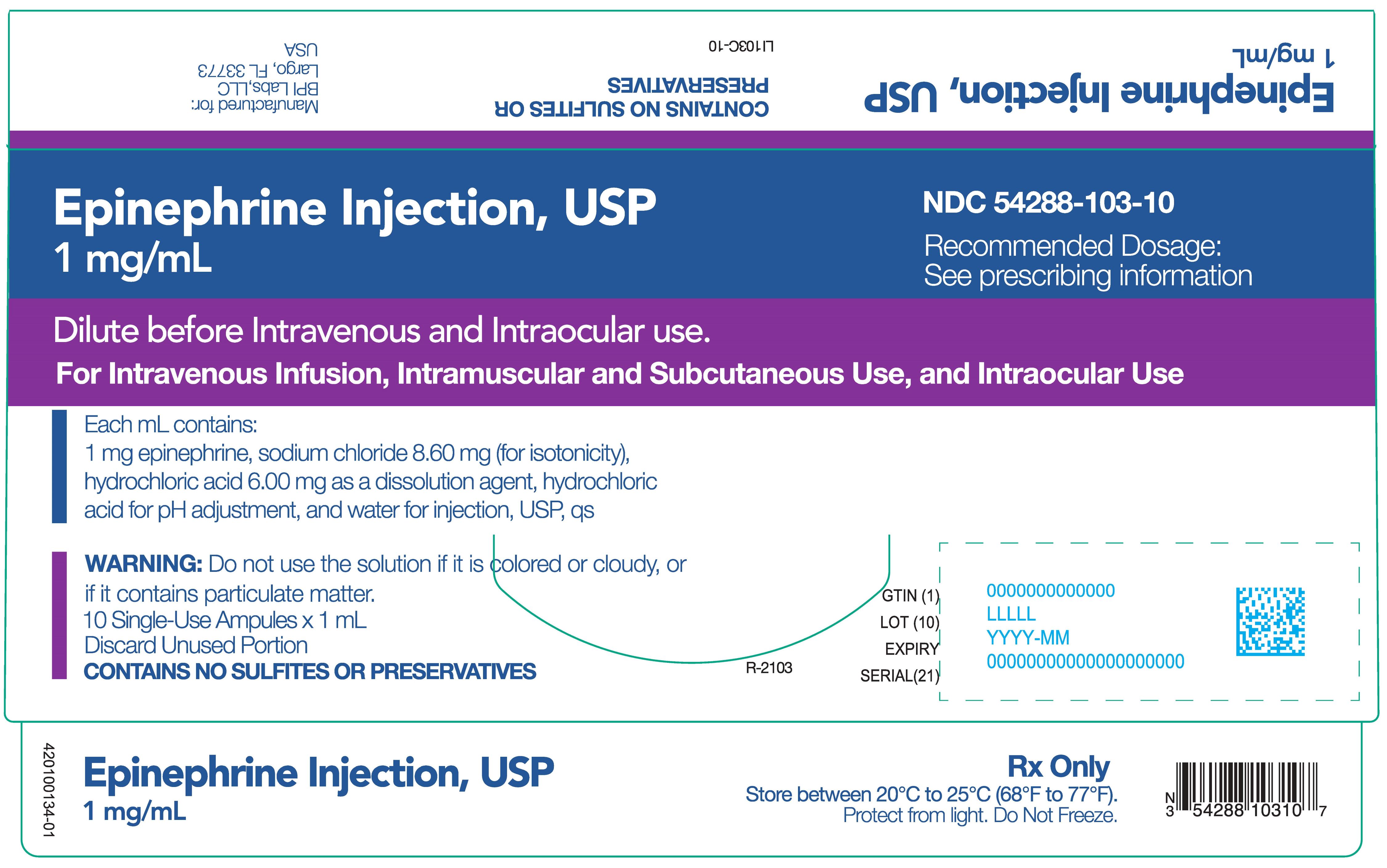
BPI Labs/Sintetica label hosted by DailyMed. The sale package identifies ten single-use ampules and sale NDC 54288-103-10. Read the complete current label for clinical use. [2]
Filled volume is different from ampule capacity
The current BPI Labs label describes 1 mg of epinephrine in 1 mL of solution, held in a 2 mL clear glass ampule. The product is manufactured by Sintetica SA for BPI Labs, LLC. [2]
This is why "2 mL ampule" is incomplete as a stand-alone contents description. It names the glass container size while leaving the amount of solution unclear. Do not use the capacity field as the filled volume when transcribing the product.
One presentation. Four separately named quantities.
In legacy single-entity epinephrine labeling, 1:1,000 corresponds to 1 mg/mL. This concentration relationship does not specify a dose, route or permission to substitute products. [1]
Concentration: 1 mg/mL
Solution in each ampule: 1 mL containing 1 mg epinephrine
Glass ampule capacity: 2 mL; single-use container
Sale package: 10 ampules; sale NDC 54288-103-10. Immediate ampule: 54288-103-01.
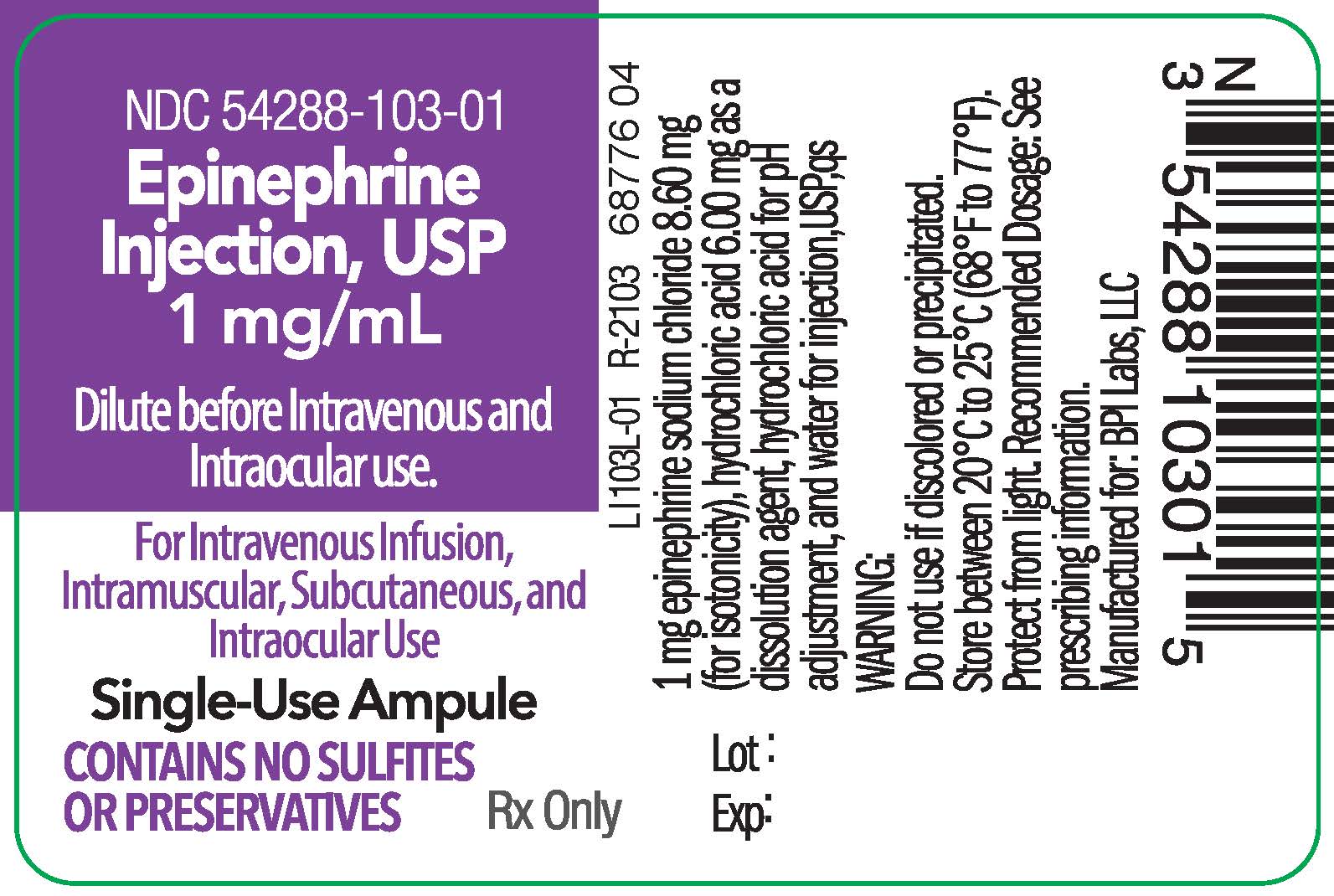
ORIGINAL IMMEDIATE-AMPULE LABEL
Exact BPI Labs/Sintetica presentation. Container contents and capacity are identification fields, not dose or route instructions. [2]
Keep the sale-package count separate from an individual container record. A package, solution amount and glass capacity are different fields.

PRACTICE + SCIENCE / VISUAL REFERENCE
Keep the fields separate.
Concentration · 1 mg/mLFilled solution · 1 mLGlass capacity · 2 mL
BPI presentation described above: concentration, filled volume and glass capacity are different fields. Conceptual artwork created with AI; not actual BPI/Sintetica packaging or a fill-volume diagram. Source: BPI label.
Work through a legacy request
Consider the hypothetical line "epinephrine 1:1,000, 2 mL ampule." Before updating it, identify what is known and what is still missing. The legacy expression can be reconciled within the single-entity scope. The words about the ampule still need an exact product match.
If the practice confirms that the line refers to the BPI presentation shown above, a clearer record could read: "Epinephrine Injection, USP, 1 mg/mL; 1 mL filled solution in a 2 mL single-use clear glass ampule; manufactured by Sintetica SA for BPI Labs; sale NDC 54288-103-10, box of 10; immediate-ampule NDC 54288-103-01." The example transcribes a known presentation after confirmation; it does not choose it for a patient.
Keep the original wording, the confirmed product identity and the current label together. If the intended presentation remains unclear, return that question to the clinical team rather than treating a matching concentration as proof. Do not alter a dose, route or intended product while modernizing terminology.
Clint product reference
After the responsible clinical team confirms the intended product, compare its full identity with Clint's epinephrine listings and the current BPI label. Confirm the supplied ordering unit and current availability before ordering.
Sources and scope
- FDA epinephrine labeling review and historical ratio-expression discussion. DMEPA review dated September 22, 2017, Reference ID 4156952, in the FDA's 2019 NDA 209359 review collection. Review date: PDF page 30. Historical passage: printed page 11/PDF page 40; May 1, 2016 implementation target for single-entity labeling. Other product-specific material in the collection concerns a different presentation and does not describe the BPI ampule.
- BPI Labs/Sintetica epinephrine ampule label. Sections 3 and 16; principal display panels and packaging. Highlights: revised December 2024; footer: revised February 2024. DailyMed updated December 26, 2025; archive version 10 published December 29, 2025. The source contains differing body revision dates; no reason for that difference is inferred.
- Clint epinephrine listings. Product navigation and displayed ordering fields only; checked October 5, 2026.
Sources rechecked October 5, 2026. This is a product-identification reference; clinical decisions require the complete current labeling and the responsible clinical team.