
PRACTICE + SCIENCE / PRODUCT REFERENCE
Is Dexamethasone 10 mg/mL Preservative-Free?
The same strength and vial volume can describe different formulations. The label resolves what the shorthand leaves out.
At a glance
What to verify first
- Dexamethasone sodium phosphate 10 mg/mL is not always preservative-free. The matched Fresenius Kabi and Hikma labels include preservative-free and benzyl-alcohol-containing presentations at that strength, expressed as dexamethasone phosphate. Concentration and vial volume alone cannot establish preservative status or clinical suitability. [1] [2]
Dexamethasone sodium phosphate 10 mg/mL is not always preservative-free. The matched Fresenius Kabi and Hikma labels include preservative-free and benzyl-alcohol-containing presentations at that strength, expressed as dexamethasone phosphate. Concentration and vial volume alone cannot establish preservative status or clinical suitability. [1] [2]
MATCHED EXAMPLES
10 mg/mL
Same stated strength
1 mL
Same vial volume
Preservative information requires the exact label
Fictional AI-created review scene; native comparison of the matched examples. Strength is expressed as dexamethasone phosphate.
A request for "dexamethasone 10 mg/mL, 1 mL" looks specific. It names a drug, a concentration and a container volume. Yet it still leaves the formulation unresolved. That gap matters when an office compares a replacement listing with an established product record.
Confirm the product the clinical team requested by checking the manufacturer, complete National Drug Code (NDC) and preservative information in its label. If a listing differs, send the specific discrepancy to that team before changing the request.
What the 10 mg/mL statement tells you
In these labels, 10 mg/mL refers to dexamethasone phosphate equivalent. Preserve that strength basis when transcribing the product description; it is not a statement of dexamethasone-base mass. [1] [2]
The concentration field answers one question: what amount is described per milliliter? It does not answer whether a preservative is present, how the container is designated or which package is being offered. Those fields need their own evidence.
Two 1 mL examples with different preservative status
The following examples hold concentration and vial volume constant. The differing ingredient information supplies the answer to the preservative question.
Same strength and volume. Different preservative information.

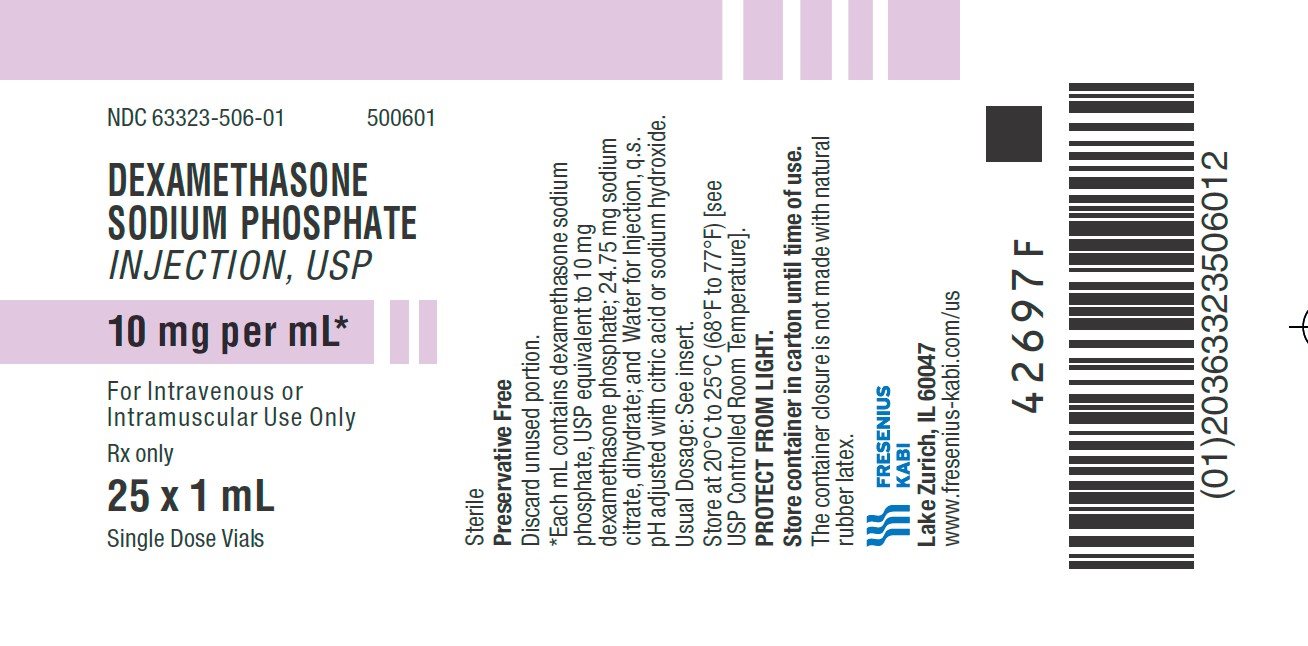
Fresenius Kabi / sale package
Hikma / sale package
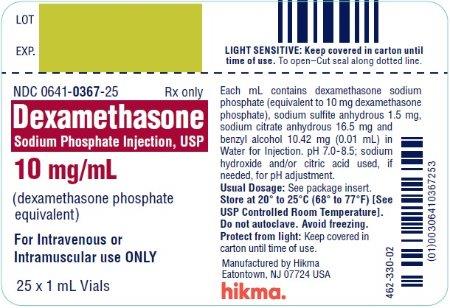
Original DailyMed display panels. Read each product’s own formulation record.
Field | Fresenius Kabi example | Hikma example |
|---|---|---|
Concentration | 10 mg/mL as dexamethasone phosphate | 10 mg/mL as dexamethasone phosphate |
Vial volume | 1 mL | 1 mL |
Preservative information | Preservative-free | Contains benzyl alcohol |
Container wording | Single-dose vial | 1 mL vial; single-dose wording not established in the inspected label |
Sale NDC and count | 63323-506-01; 25 vials | 0641-0367-25; 25 vials |
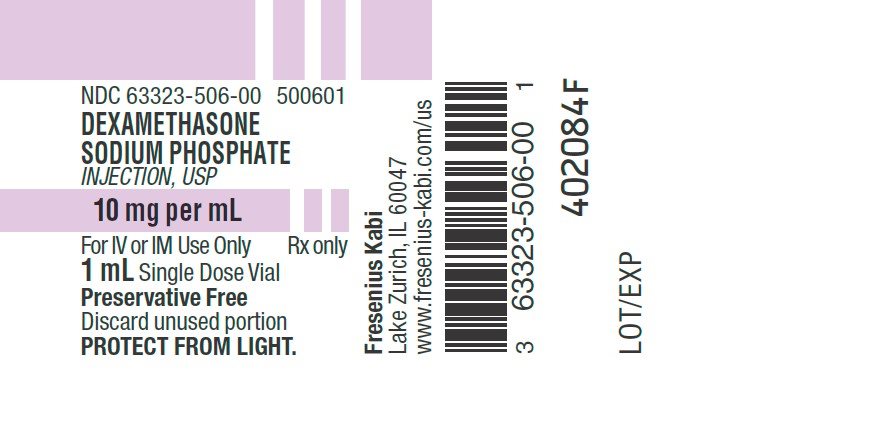
Immediate-vial NDC | 63323-506-00 | 0641-0367-21 |
Exact labeled examples, not a recommendation to replace one with the other. Manufacturer labels support the product facts. [1] [2]
The unresolved designation in the Hikma column is intentional. Filling that cell from a seller abbreviation would make the comparison look more certain than its evidence. A record can be complete about an ingredient while still requiring clarification about another field.
Preservative status and vial designation are separate
Fresenius Kabi's preserved 10 mg/mL presentation contains benzyl alcohol: ten 10 mL multiple-dose vials, sale NDC 63323-516-10; immediate-vial NDC 63323-516-01. [1]
Record preservative information, container designation, vial volume and package quantity separately.
If the clinical request specifies preservative-free, retain that requirement explicitly. If it specifies a container designation, retain that too. When a candidate listing leaves either field unclear, return the exact gap for review. Adding a guessed abbreviation makes an incomplete request harder to recognize.
Reconcile the identifier before treating it as a mismatch
ONE MATCHED SALE PACKAGE / TWO DISPLAY FORMS
Primary label 0641-0367-25
Clint display 00641-0367-25
Formatting alone does not settle container designation.
Clint displays the Hikma sale identifier as 00641-0367-25, while the primary label uses 0641-0367-25. The catalog form adds a leading zero to the first segment for this matched record. That formatting difference does not supply evidence for the seller's single-dose shorthand. [2] [3]
Package level deserves the same care. A sale NDC and the identifier on a vial inside that package can differ. Preserve the relationship instead of replacing one number with the other. The comparison supplies both levels for the two 1 mL examples so a purchase record and an individual-container check can refer to the same presentation.
When reconciling a record, attach a plain label to each identifier: sale package or immediate vial. Keep the observed source form alongside any catalog formatting. This gives the next reader enough context to investigate a discrepancy without reconstructing the original comparison.
PRACTICE + SCIENCE / VISUAL REFERENCE
Keep the formulation explicit.
10 mg/mL as dexamethasone phosphatePreservative informationExact manufacturer and sale NDC
Conceptual artwork created with AI. Two generic unmarked medicine vials beside a blank reference card. Product identity and instructions come from the cited sources, not this illustration.
Turn an incomplete request into a useful clarification
Consider a hypothetical request that says only "dexamethasone 10 mg/mL, 1 mL." The comparison shows why those words cannot settle the preservative question. A useful response to the clinical team responsible for the request would be: "Please confirm the required formulation and exact product. The two matched 1 mL examples differ in preservative status; the request does not yet identify which is intended."
Once the responsible clinical team confirms the product, the purchasing record can preserve that decision in separate fields. If the confirmed choice is the Fresenius Kabi example above, the hypothetical record could read:
Product: Dexamethasone sodium phosphate injection
Concentration: 10 mg/mL as dexamethasone phosphate
Preservative designation: Preservative-free
Container: 1 mL single-dose vial
Sale NDC and package: 63323-506-01; labeled package of 25
Immediate-vial NDC: 63323-506-00
This is a hypothetical transcription of the cited presentation, not a product-selection instruction. [1]
Keep the source and date checked. Refer a changed field back to the responsible clinical team; approval for an identified product does not extend to every listing with the same strength.
Clint product reference
After the clinical team confirms the required formulation, use Clint's dexamethasone listings to locate its exact manufacturer and sale NDC. Check the supplied purchasing quantity and current availability separately. Keep any unresolved formulation or designation question visible until it has been answered.
Sources and scope
- Fresenius Kabi dexamethasone sodium phosphate label. Description, How Supplied and packaging. Body revised March 2026; DailyMed updated June 30, 2026.
- Hikma dexamethasone sodium phosphate label. Description, How Supplied, principal display panels and packaging. Revised December 2024; DailyMed updated January 22, 2026.
- Clint dexamethasone listings. Product navigation and displayed catalog fields only; checked October 5, 2026. Availability and supplied ordering unit require confirmation.
Original immediate-vial label, NDC 63323-506-00. [1]
Sources rechecked October 5, 2026. This is a product-identification reference; clinical decisions require the complete current labeling and the responsible clinical team.